Flooded Basement Cleanup in Portland
Request an estimate
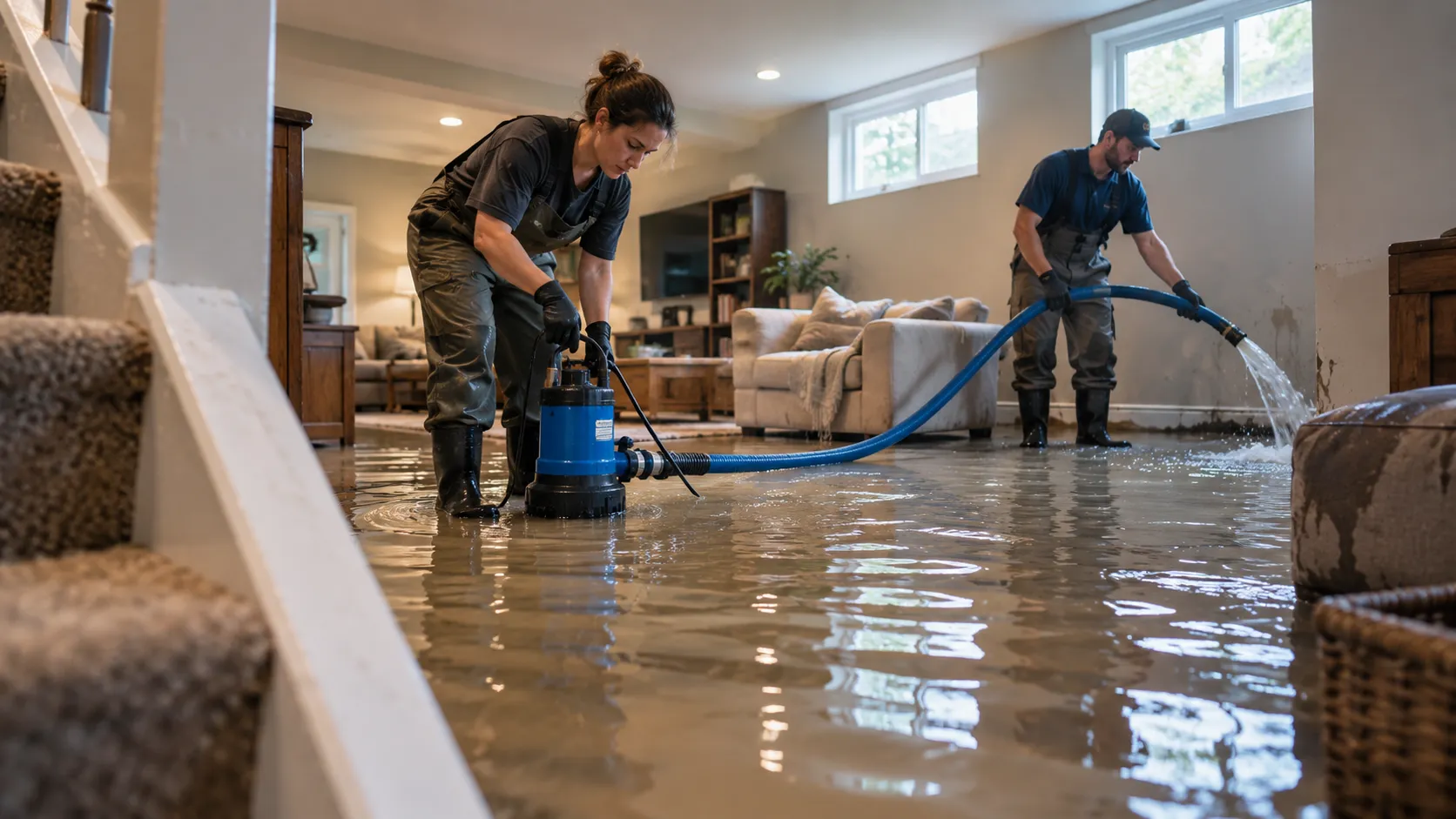
A flooded basement can feel like a mess you should tackle alone. Some of it you can. You can shut off the water source, move belongings upstairs and photograph the damage. The rest, like pumping out deep water, drying wet walls and handling dirty floodwater, is where a provider's equipment and training matter.
Alliancebody Restoration is a referral service. It does not do the cleanup. It connects homeowners in the Greater Portland area with independent local providers who handle flooded basements. You can request an estimate, compare more than one approach and decide without pressure. Nothing is required until you pick a provider and agree to the work.
Flooded basement? Check safety before you touch anything
Look before you step. Water near outlets, a furnace, a water heater or the electrical panel is a stop sign. Water and power do not mix.
- Shut off basement power at the main panel only if the panel is dry and you can reach it without stepping in water.
- If you can't reach it safely, stay upstairs and ask your utility or a licensed electrician for help.
- Skip the household vacuum. It is not made for standing water.
- Wear rubber boots and gloves if you must go down.
Warning signs that mean stay out
Smell gas? Leave the house and report it from outside. Also stay out if the ceiling sags, the walls bow or the stairs feel soft.
Find out where the water came from
The source decides how risky the water is and what the fix looks like. Take a minute to work it out.
Clean supply line or tank leak
A split pipe, a failed washing machine hose or a leaking water heater is the easier case. Shut the fixture valve or the main valve. Then the water stops growing.
Rain, snowmelt or storm water
Heavy rain, spring snowmelt and coastal storms push groundwater through walls and floors. Treat it as dirty. It carries soil and bacteria.
Sewage backup
Gurgling drains and a sour smell point to sewage. Don't wade in and don't mop it. This is where DIY ends and a provider with protective gear begins.
Why a flooded basement needs a quick response
Water does not stay on the floor. It wicks up drywall, soaks framing and sinks into concrete. Mold can start in a couple of days when the air stays damp.
Older homes with stone or block foundations soak up moisture like a sponge. Freeze-thaw cycles open small cracks each winter, and snowmelt finds them in spring. That makes early drying more important in cold regions.
Do the safe part yourself
These steps are within reach for most handy homeowners. They also make a provider's job faster.
- Photograph the water line, damaged items and the source before you move anything.
- Move furniture, boxes and electronics to dry ground upstairs.
- Pull up small rugs and lift fabric off the floor.
- Open windows or run fans only if the air outside is dry enough to help.
- Hold off on pumping out deep water until you ask a provider. Emptying a basement too fast while the soil outside is soaked can stress the walls.
Where DIY stops
Stop when the water is deep, dirty or still coming in. Stop when it touches electrical parts. Stop when drywall, insulation or carpet is wet through. Many providers offer emergency water damage repair for these situations, and they can often respond quickly. Request a callback to check provider availability in your area.
What flooded basement cleanup includes
Scope varies by job, but a typical visit covers:
- Water extraction with pumps and wet vacuums
- Removal of soaked carpet, pad, drywall and insulation
- Structural drying with air movers and dehumidifiers
- Cleaning and sanitizing floors, walls and framing
- Moisture readings to confirm things are dry
- Odor control once the area is clean
Finished vs. unfinished basements
An unfinished basement with bare concrete is usually simpler. The water is pumped out, the floor is cleaned and the space is dried.
A finished basement is trickier. Water hides behind paneling, under flooring and inside wall cavities. A provider may cut small openings to check. Wet drywall and insulation often have to come out, since they hold moisture and feed mold.
Stop, then compare
You don't have to say yes to the first quote. Ask two or three providers for written estimates and set them side by side. Look at the scope, the equipment, the drying plan and what is left out. A lower number can mean less work. A higher one can mean a fuller plan. Decide without pressure.
Questions to ask the provider
- What caused the water, and is it clean, gray or sewage?
- How will you measure that things are fully dry?
- Which materials do you plan to remove, and why?
- Is the quote written, and what could change it?
- Can you help document the damage for an insurance claim?
Your belongings
Sort items into three piles: dry and fine, wet but worth saving, and toss. Hard goods like tools and plastic bins often clean up well. Soaked mattresses, upholstery and particleboard rarely recover. Photograph everything before it goes to the curb. Paper, photos and keepsakes can be laid flat to dry or frozen until you have time to sort them.
Insurance and paperwork
Some policies may cover sudden damage, like a burst pipe. Seepage and rising groundwater are often treated differently. Check your policy and ask your agent. Providers can often help document damage for a claim.
After the cleanup
The job is not over when the floor looks dry. Keep a dehumidifier running and watch for a musty smell. Test your sump pump by pouring in a bucket of water. Clear gutters, point downspouts away from the house and check the ground slopes away from the foundation. Seal visible cracks before the next thaw.
Ready to compare options?
Send a request and review what comes back at your own pace. Alliancebody Restoration only makes the introduction. The provider does the work, and you choose whether to go ahead.
What's Included
Water Extraction
Pumps and wet vacuums pull standing water out before it soaks deeper into floors.
Wet Material Removal
Soaked carpet, pad, drywall and insulation come out so they can't hold moisture.
Drying and Dehumidifying
Air movers and dehumidifiers dry the slab, framing and air until readings look normal.
Cleaning Up
Surfaces get cleaned and sanitized, and odors are treated once the area is dry.
Typical Flooded Basement Cleanup Costs
Prices vary a lot by water depth, water type, basement size and finish level. These are typical U.S. ranges only, so always get a written quote.
| Item | Typical range | Notes |
|---|---|---|
| Standing water pump-out | $300 – $1,000 | Depends on depth and square footage |
| Structural drying (multi-day) | $1,000 – $4,000 | Equipment, monitoring and days needed |
| Wet drywall and insulation removal | $500 – $3,000 | More if walls are finished |
| Cleaning and sanitizing | $500 – $2,500 | Higher for gray or storm water |
| Sewage backup cleanup | $2,000 – $7,000 | Needs protective gear and disposal |
| Mold testing | $300 – $1,000 | Only if growth is suspected |
How It Works
Do the safe part
Shut off the source, photograph the damage and move belongings to dry ground upstairs.
Request an estimate
Tell us about the water, the basement and your location in Portland.
Compare your options
Review the scope, drying plan and written quotes from each provider side by side.
Choose and schedule
Pick the provider that fits, or pause if you need more time.
Why Call Alliancebody Restoration
Less time searching
One request reaches independent local providers, so you spend less time hunting for numbers.
Side-by-side quotes
Compare written estimates, scope and drying plans before choosing anyone for the job.
No obligation
Requesting an estimate commits you to nothing. You decide if and when to hire.
Honest roles
Alliancebody Restoration makes the referral. Independent providers do the cleanup and set their own prices.
Other Services
Need flooded basement cleanup in Portland?
Send a few details about your water problem and request an estimate from an independent provider in our network. You compare, then you decide.
No obligationFlooded Basement Cleanup FAQ
- What should I do first when my basement floods?
- Stay out of the water until you know the power is safe. Shut off the water source if it's a pipe or tank. Photograph the damage, move dry items upstairs, then request estimates from local providers before the moisture spreads into the walls.
- Can I clean a flooded basement myself?
- You can handle small, clean leaks with towels, fans and a wet vacuum. Deep, dirty or sewage water, wet drywall and anything near electrical parts are better left to a provider with the right equipment.
- How long does a flooded basement take to dry?
- It depends on the water depth, materials and humidity. Drying often takes several days. A provider uses moisture readings to confirm the basement is dry, rather than guessing by how it looks.
Request a callback
Send a few details about your water problem and request an estimate from an independent provider in our network. You compare, then you decide.
No obligation