Water Extraction and Structural Drying in Portland
Request an estimate and compare
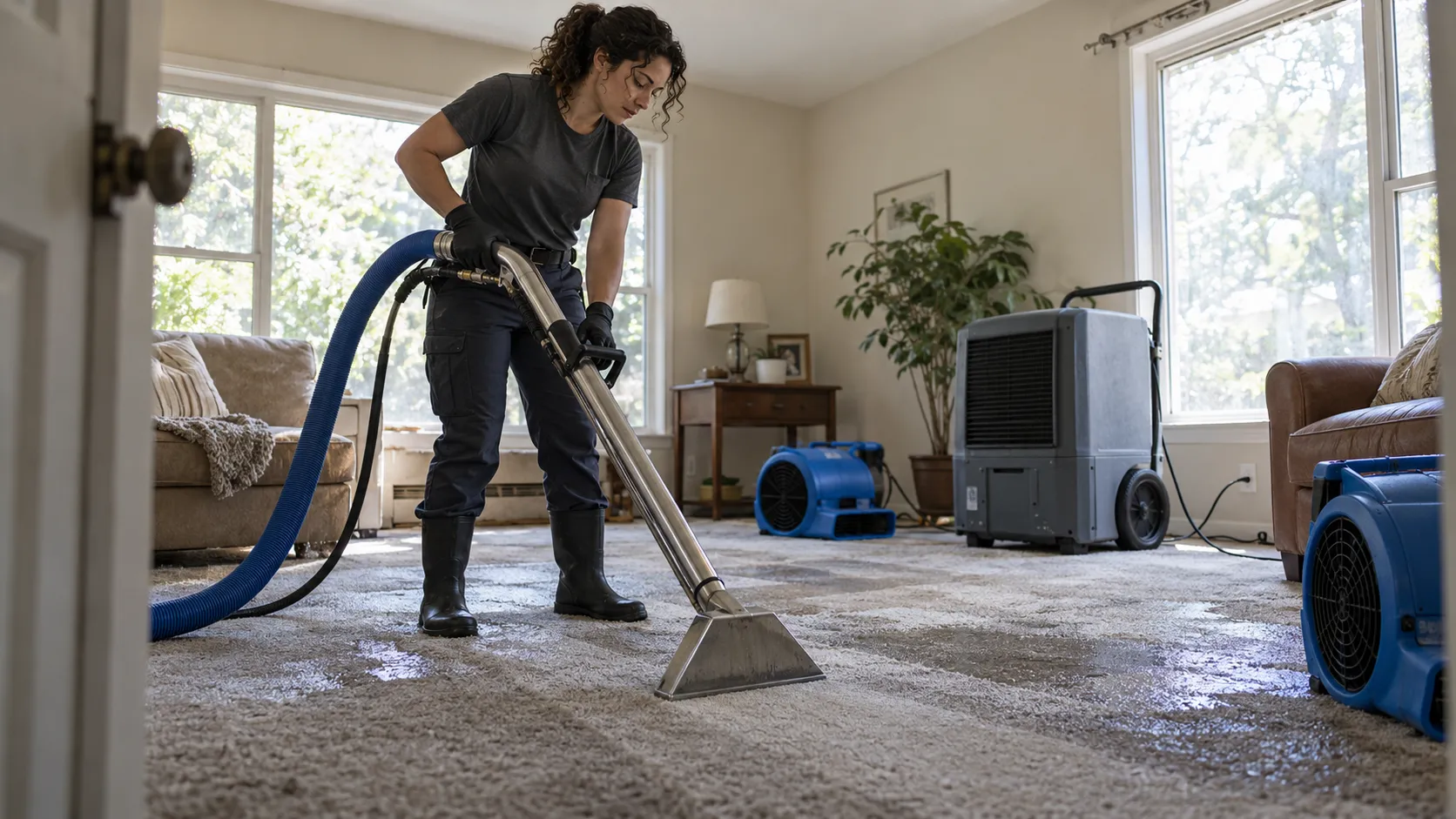
Water extraction is the first job. A provider uses pumps and strong vacuums to pull standing water off floors and out of carpet, pads, and low spots. Structural drying comes next. It dries the parts you cannot mop, like wall cavities, subfloors, and framing.
Alliancebody Restoration is a referral service. We do not do the work. We connect homeowners in Portland and the Greater Portland area with independent local providers in our network. You can request an estimate, compare approaches side by side, and decide without pressure. This page shows what you can safely do yourself, where to stop, and what to ask before you pick a provider.
Water on the floor? Start here
Look before you step. If water touches outlets, power strips, or the electrical panel, stay out. Do not wade in to flip a breaker. Wait for a licensed electrician or your utility.
If the area is safe, find where the water is coming from. A burst pipe, a failed washer hose, and a backed-up drain all need different fixes. Close the nearest shutoff valve first. Then stop, and compare your options.
Do the safe part yourself
These steps are fair game for a handy homeowner:
- Shut off the water at the main or at the fixture valve.
- Photograph everything before you move it. Wide shots first, then close-ups.
- Lift small items, rugs, and books off wet floors.
- Mop or squeegee shallow puddles toward a floor drain.
- Open windows if the weather allows, and run a fan.
Where DIY stops
A shop vac and a few towels will not reach water inside walls. They also will not pull moisture out of a subfloor. If water has been sitting more than a short while, or it covers a large part of a room, a provider's pumps and drying gear do a job your tools cannot.
Also stop if the water came from a sewer line or a storm surge. That water can carry germs. Keep kids and pets out and let a pro handle it.
Why pulling water out quickly matters
Water moves. It soaks into drywall from the bottom up. It slips under flooring and into insulation. The longer it sits, the more material gets wet and the harder it is to dry.
Mold can start growing on damp surfaces in a day or two in the right conditions. Wood can swell and warp. Many providers can respond quickly, so ask about availability when you reach out.
How water extraction works
Extraction is simple in idea. The provider removes bulk water first, before any drying gear goes in.
Pumps and vacuums
For deeper water, a provider may use a submersible pump. For shallow water, they use truck-mounted or portable extractors. These pull far more than a shop vac can.
Carpet, pads, and hardwood
Carpet can often be extracted in place. The pad underneath may need to come out, since it holds water like a sponge. Hardwood sometimes needs special drying mats to pull moisture out of the boards. A provider will tell you what can be saved and what cannot.
How structural drying works
After the standing water is gone, the building is still wet. Structural drying removes that hidden moisture so walls and floors can be used again.
Air movers and dehumidifiers
Air movers push dry air across wet surfaces. Dehumidifiers pull moisture out of the air so it does not settle back. Providers set them up in a pattern based on the room. Some also drill small holes or lift baseboards to reach wall cavities.
Moisture readings
A good provider checks moisture with meters, not just by touch. Readings are taken at the start and again as drying goes on. You can ask to see them. They tell you when the structure is truly dry.
How long does drying take?
It depends on the materials, how much water got in, and the weather. Many jobs take a few days. Thick framing, dense flooring, and damp basements can take longer. Humid air slows everything down.
Your provider should give you a rough window and explain what could change it. Treat any number as an estimate, not a promise.
What you can do while you wait
While you line up a provider, keep helping:
- Keep the furnace fan or a box fan running for air flow.
- Prop up furniture legs on foil or wood blocks.
- Pull out wet rugs and hang them somewhere dry.
- Keep a list of damaged items with notes on age and price.
- Keep your receipts for any supplies you buy.
Do not run a regular household vacuum on wet floors. Do not crank the heat in a closed room and leave it. That can trap moisture.
Older homes and cold-weather notes
Older houses with stone or block foundations often take on water through cracks and joints. Full basements collect it fast. After spring snowmelt or a coastal storm, ground water can push in at the low spot of the house.
Cold snaps can split pipes, and the leak often shows up when things warm up. If you find a wet ceiling or wall after a cold spell, treat it like a pipe break. Shut off the water and look for the source.
Compare estimates without pressure
Requesting an estimate does not lock you into anything. Ask two or three providers to explain their plan. Put the answers side by side. Decide without pressure.
Some policies may cover sudden damage, so check your policy. Providers can often help document damage for a claim. Ask what paperwork they can share.
Questions to ask the provider
- What will you extract first, and with what equipment?
- How will you check for hidden moisture?
- How many drying machines do you expect to use?
- Will you give me moisture readings as you go?
- What is in the written quote, and what might change it?
When to move from DIY to a provider
Move up to a provider when water is in walls, under floors, or deeper than a shallow puddle. Do the same when the source is unclear or the water is dirty. Request a callback to check provider availability, or send the request form and compare.
What's Included
Standing water removal
Pumps and extractors pull water off floors and out of carpet so drying can start on solid ground.
Wall cavity drying
Providers can reach damp insulation and framing that mops and towels never touch.
Air movers and dehumidifiers
Fans and dehumidifiers work together to pull moisture from surfaces and keep it out of the air.
Moisture readings and checks
Meters track how wet materials are over time, so you can see when the structure is truly dry.
Typical extraction and drying costs in the U.S.
Prices vary a lot by water volume, materials, and how long drying takes. These are typical U.S. ranges only. Always ask each provider for a written quote before work starts.
| Item | Typical range | Notes |
|---|---|---|
| Small extraction job | $300 – $1,000 | One room, shallow water, easy access |
| Larger extraction job | $1,000 – $4,000 | Several rooms or deeper standing water |
| Drying equipment rental period | $500 – $2,500 | Depends on machine count and days on site |
| Wall cavity drying | $400 – $1,500 | May involve small holes or removed baseboards |
| Carpet pad removal | $200 – $800 | Priced by room size and disposal |
| Moisture inspection | $100 – $400 | Often included in a larger quote |
How It Works
Stop the source
Shut off the water at the valve or main, and stay clear of electrical hazards.
Document it
Photograph the water, damage, and items before you move anything, then lift small things up.
Request an estimate
Send the form or request a callback to check provider availability and get started.
Compare, then decide
Review the plans and written quotes, ask your questions, and choose without pressure.
Why Call Alliancebody Restoration
Compare before you commit
Request an estimate, read each plan side by side, and pick what makes sense for you.
Less searching
One request form or phone number reaches independent local providers in our network.
Honest DIY limits
We tell you what you can safely do yourself and where a provider takes over.
No pressure
Getting an estimate is not a commitment, and there is no obligation to hire.
Other Services
Need water extraction and structural drying in Portland?
Send a few details about your water problem and request an estimate from an independent provider in our network. You compare, then you decide.
No obligationWater Extraction and Structural Drying FAQ
- What is the difference between water extraction and structural drying?
- Extraction removes standing and bulk water with pumps and vacuums. Structural drying comes after. It uses air movers and dehumidifiers to pull hidden moisture out of walls, floors, and framing.
- Can I dry out my house myself with fans?
- Fans help with small, surface-level spills. They rarely dry wall cavities or subfloors. If water got deep into materials, a provider's equipment and moisture meters give a more reliable result.
- How do I know when the structure is fully dry?
- Providers use moisture meters and take readings over several visits. The job is done when readings return to normal levels for your materials. Ask to see the numbers before they remove equipment.
Request a callback
Send a few details about your water problem and request an estimate from an independent provider in our network. You compare, then you decide.
No obligation